Sewer and Water Line Excavation in Seattle
Key Takeaways: Two Different Calls, Two Different Jobs
- A failing Seattle sewer run usually produces two visits rather than one, because nobody opens ground in the middle of the night and a household still has to get through until morning.
- The first Seattle visit restores flow. That is genuinely useful and it is a holding action, not a repair, and it should be described that way rather than sold as a fix.
- The second Seattle visit is the excavation, and it needs daylight, locating, a permit and an agreed surface plan behind it.
- The camera belongs to the second conversation. Four findings end the cleaning conversation: a collapse, a joint out of alignment, a length holding standing water, and roots entering through a break.
- How long a Seattle holding action holds depends on what the footage found, and a run that reopens quickly is telling you the interval is short.
- Trenchless methods are conditional on depth, material, degree of collapse and access at both ends, and none of them is available on the night visit.
- Utility locating precedes any Seattle excavation and is a legal and safety obligation, which is one concrete reason the dig cannot simply happen straight away.
- Roto-Rooter is fully licensed and insured, handles the permit and inspection process, provides on-site estimates before any work begins, and answers 24/7, 365 days a year.
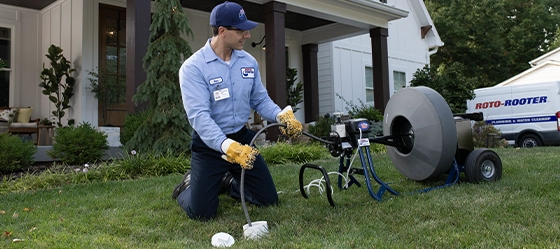
The two calls do different things and it is worth being blunt about which is which. The one that happens at an inconvenient hour gets a Seattle household draining again. The one that happens on a working day replaces the pipe. Conflating them is how people end up feeling misled, because a line that flows tonight can be exactly as broken tomorrow as it was this afternoon.
What Restoring Flow Actually Does
Clearing a failing Seattle run removes what is currently obstructing it and returns the building to service. That is not a small thing when a household has stopped functioning, and it is the right first move. What it does not do is change the condition of the pipe. Where the run has failed structurally, everything the clearing removed will reassemble, and the honest question after the water goes down is how long that will take.
The answer comes from looking. Repeat backups, several fixtures slowing together and wet ground over the route all point at the main line without explaining it, so a camera survey is what turns tonight's result into a plan. Four findings take a Seattle run out of the cleaning category: a collapsed length with no bore left, a joint stepped out of alignment that catches solids on every discharge, a sag holding standing water so the run reloads regardless, and roots entering through a break that will keep admitting them.
What Only Opening the Ground Can Do
An open cut across a Seattle lot trenches along the run, lifts the failed pipe, lays the new one, then backfills and compacts, and it is the method that lets a length be re-laid to a proper fall rather than merely replaced. Pipe bursting draws a new line along the old path from access pits at each end, and lining cures a new wall inside the existing pipe. Both leave far less ground open.
Every one of those needs conditions the night visit cannot supply. Locating has to be done and marks have to be down. The work is permitted and inspected. The surface plan has to be agreed. And the method itself is conditional on depth, pipe material, the degree of any collapse and usable access at both ends, all of which come off the footage. That is not bureaucracy delaying a repair, it is the difference between a repair and a hole.
Serving the entire Seattle metro area, Including:
Counties in the Seattle Metro Area
Sequencing the Emergency and the Repair
The Seattle order that works is straightforward. Restore flow so the building is usable. Get the camera down the line while the run is clear, because a survey through a blocked pipe sees less than one through a clear pipe. Read the finding, then decide the method and the scope, then book the excavation with locating and permitting behind it. Each step gives the next one something it needs.
What that sequence prevents is the worst version of this job, which is a trench dug in a hurry against a finding nobody has read properly. A Seattle household that has been draining again for a week can make a decision calmly, look at a written scope, compare it with another, and agree what happens to the yard. None of that is available at one in the morning with water on the floor.
Marks Down Before Anything Opens
Gas, electric, water and telecom are located and marked before a Seattle excavation begins, and this is a legal and safety obligation rather than an administrative preference. It is also the clearest single reason the dig is a separate visit: nobody can have utilities marked in the middle of the night, and no responsible crew opens ground without it.
Permitted Work and No Promised Dates
Washington state work of this kind is permitted and inspected, and Roto-Rooter carries that process as part of the job. This page gives no permit fee and no approval timeline, because both vary by jurisdiction and by the scope of the specific job, and a number published here becomes a promise nobody authorized. Duration is treated the same way, and in a market with a long wet season that is honesty rather than hedging. Your on-site estimate covers scope against the actual work.
Where the Private Run Ends
The line from the building to the public main is generally the property owner's, and the main is generally the municipality's. Where that boundary falls, at the property line, at the curb or at the connection, is set locally and varies. Confirm it with your municipality rather than assuming, because it decides who pays for which length of pipe, and a repeated backup whose cause lies beyond the connection is a different conversation entirely.
Roto-Rooter works on the property owner's side of that boundary. Municipal main work is not something a plumbing company undertakes, so a finding past the connection sends the next call to the city.
Surface Work in a Wet Market
An open cut disturbs ground along its whole length, and where the Seattle run passes under a driveway, a walk or a patio, that surface has to be opened. Backfill and compaction are part of the work, and in ground that stays wet, compaction is what decides whether the trench line disappears or becomes a soft stripe that collects water. Trenchless reduces the footprint substantially where the line supports it, though the access pits at each end are still excavations.
Final surface restoration, meaning turf, planting, paving or hardscape, is scoped on the property and agreed before work starts rather than assumed either way. Because this conversation happens on the calm second visit rather than during an emergency, there is no excuse for leaving it vague.
How Long a Holding Action Holds
Honestly: nobody can put a number on it, and the finding is the best guide available. A run cleared over a collapse is on borrowed time. A run cleared over roots at a broken joint reopens on the growth. If it goes again before the excavation is booked, emergency plumbing help in Seattle restores flow again, and each repetition is the line arguing for the second visit. For everything else handled locally, start at the Seattle service page.
Call to Restore Flow, Then Book the Survey
Roto-Rooter has served property owners here since 1935 and is fully licensed and insured. Washington state plumbing code governs the work. Call 206-935-6600 or schedule online, at whichever hour the problem arrives. Roto-Rooter answers 24/7, 365 days a year and provides on-site estimates before any work begins, so the emergency gets handled tonight and the repair gets decided from evidence. Knowing which visit is doing which job is the plumbing peace of mind worth having.

What the Camera Adds That the Night Visit Cannot
A Long Wet Season and Dense Older Stock

SPECIAL FINANCING AVAILABLE
We have partnered with Synchrony Bank to offer financing options to make your plumbing repair expenses as convenient and stress-free as possible.