Sewer and Water Line Excavation in Raleigh
Key Takeaways: Ground That Hides a Failing Line Until Excavation
- A lateral can be broken for years in Raleigh without producing a wet patch, a smell or a soft spot, because the soil takes the water away before it reaches the surface.
- Water moving through a defect carries fine Raleigh soil with it, so a void grows around the pipe while the lawn above still looks perfect.
- A depression appearing in turf or paving is a late symptom rather than an early one. By then the ground around the run has been moving for a long time.
- That is why a camera inspection does the diagnosing in Raleigh. Repeat backups after cleaning are the signal worth acting on, since the yard will not offer one.
- Trenchless methods are conditional on depth, the material and condition of the pipe, the degree of collapse and usable access at both ends. Loose ground around a run is one more thing the survey has to weigh.
- Utility locating happens before any excavation and is not optional. Gas, electric, water and telecom all get marked before the ground opens.
- The work is permitted and inspected and Roto-Rooter handles that process. Roto-Rooter is fully licensed and insured.
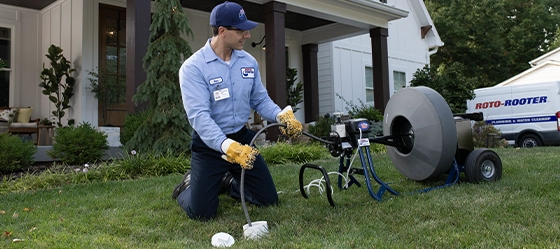
Tight clay tells on a broken sewer line. It holds the water near the surface, the grass over the run comes up greener than the rest of the lawn, and there is usually a smell. Sandier ground does none of that, and a great deal of Raleigh sits on sandier ground. Water leaves through the defect, moves down through soil that drains readily, and produces no sign at all above it.
Why Is There No Wet Spot If the Sewer Line Is Broken?
Because the soil is doing exactly what soil like this does. Permeable ground takes water away vertically rather than holding it where you can see it, so the classic surface evidence never appears. That absence is genuinely misleading, and it is the reason households in this part of North Carolina tend to arrive at a sewer problem later than they should, having spent a year or two treating recurring backups as bad luck.
Something is happening down there regardless. Water passing through an open joint in either direction moves fine material with it, washing soil into the bore when the ground is charged after a summer downpour and carrying it away from around the pipe the rest of the time. Both directions do the same structural damage: the pipe loses the support it was bedded on, and a cavity forms around it. The lawn stays convincing until the cavity is large enough that the surface finally drops into it.
Sewer Line Replacement When the Damage Is Already Under the Lawn
The practical consequence is that a Raleigh survey is worth running earlier than instinct suggests. A camera separates the four findings that end the cleaning conversation from the ones that do not: a collapsed section with no bore left, a severe offset leaving a lip that catches everything, a belly holding standing water so the run silts up on a cycle, and roots entering through a broken joint, which is structural because the opening will readmit them.
It also reports something a Raleigh survey has particular reason to look for, which is whether the pipe still has ground under it. A run sitting in a washed-out pocket behaves differently from one bedded solidly, and it changes the repair. Pipe bursting relies on surrounding soil to accept the old pipe as the head pushes it outward and to hold the new line in place afterward, and loose or voided ground gives less of both. Lining wants a bore round and continuous enough to cure against. Open-cut works on anything and stays the baseline the other two are measured against.
Serving the entire Raleigh metro area, Including:
Counties in the Raleigh Metro Area
Locates First, Because Sand Gives Nothing Away
Gas, electric, water and telecom occupy the same Raleigh corridor a sewer lateral runs through, and loose soil hides all of them just as effectively as it hides a leak. Utility locating is requested and marked before an excavator touches anything, and nothing gets opened until the marks are down. It is a legal and safety obligation before it is anything else, and anyone offering to trade the step for a day on the schedule is proposing to gamble with a gas line.
The job is permitted and inspected and Roto-Rooter handles that process as part of the work. You will find no permit figure and no approval timeline here, because both vary by jurisdiction around Raleigh and by the scope of the individual job, and a number published on a page becomes a promise nobody authorized. The on-site estimate settles it against the actual work.
Where the Municipality Takes Over
Generally the lateral from the building to the municipal main is the property owner's and the main is the municipality's. Where exactly that changes, at the property line, the curb or the connection, is set locally and differs between jurisdictions in North Carolina as everywhere. Confirm it with your municipality rather than assuming, because it decides who pays for which length of pipe.
Roto-Rooter works the property owner's side of that boundary. Municipal main work is not something a plumbing company undertakes, so when the survey points past the connection the next call is to the city rather than to a contractor.
Backfill in Soil That Washes
Reinstating a Raleigh trench in free-draining ground asks for more attention than it usually gets. Loose sandy spoil dropped back over a new pipe offers poor support and moves again the first time water runs through it, which is how a repair develops the same symptom it was meant to cure. Bedding material that will stay put under the pipe, and compaction in lifts above it, are the difference, and they are fair things to ask about by name.
Expect the surface to be discussed honestly too. Ground that will not stand in a vertical face has to be cut back or supported, so an opening in a Raleigh lawn takes more turf than the width of the pipe suggests. A cut through a drive or a walk is patched and stays visible. Final surface restoration, meaning turf, paving or hardscape, is scoped on site and written into the estimate rather than assumed.
One Void or a Line Losing Sand Everywhere
A spot repair is the right answer where the camera shows a single open joint or one failed length in a run that is otherwise sound and still properly supported. The trench opens over that section alone and the rest of the lawn is left undisturbed.
What argues for replacing the run is North Carolina soil showing up at more than one point along it. Material entering in several places says several joints have opened, and in ground that drains this readily the surrounding soil around all of them has been on the move. Ask how many entry points the footage shows and how far apart they sit, because that count is the honest difference between the two jobs.
If the Lawn Opens Up Before the Repair
A line this far along does not keep to a schedule. When it backs up before the crew arrives, Raleigh emergency plumbing help can restore flow so the household keeps functioning, on the understanding that clearing it is a holding action and changes nothing the camera found. If a depression appears in the meantime, keep vehicles and foot traffic off it. For everything else handled locally, start with Roto-Rooter in Raleigh.
Book a Camera Survey While the Lawn Still Looks Fine
The whole argument of this page is that waiting for visible evidence in Raleigh costs you the cheaper version of the repair. Call 919-546-8689 or schedule online for a survey that puts the line, its condition and every defect on record with a distance attached. Roto-Rooter provides on-site estimates before any work begins, so scope and footage arrive together and the decision is made from evidence. Roto-Rooter is fully licensed and insured, has worked on North Carolina drain and sewer lines since 1935, and answers 24/7, 365 days a year, which is most of the plumbing peace of mind available on a repair this size.

Sandy Loam, Fall-Line Ground and Water That Simply Leaves
What the Footage Finds Before the Lawn Does

SPECIAL FINANCING AVAILABLE
We have partnered with Synchrony Bank to offer financing options to make your plumbing repair expenses as convenient and stress-free as possible.