Sump Pump Repair and Installation in Providence
Key Takeaways: The Pump With Its Motor Up on a Post
- A lot of the equipment still working in Providence is the older upright kind, with the motor held clear of the water on a column and a float riding a vertical rod. It was built to be repaired, and it usually can be.
- It fails at the linkage far more than at the motor. The rod corrodes, the float guide binds, the switch arm drifts out of adjustment, and the pump either stops starting or stops stopping.
- The crock underneath is open, so everything that reaches the floor of an old Providence cellar reaches the pit as well: grit off a stone wall, sediment, and whatever gets swept toward the low corner.
- A check valve that no longer seats sends the water in the discharge pipe back down on every cycle, and on an upright pump you can usually hear it happen.
- The discharge line in this stock was fitted wherever it fitted, which on a small city lot means it may end far closer to the wall than it should.
- Rhode Island storms come off the water and sit for the better part of a day, so the load is long rather than sudden, and the outage that comes with them is the argument for a backup.
- The real question in many of these houses is not which pump to buy. It is whether to keep the old arrangement running or convert to a lined pit with a sealed unit in it.
- Roto-Rooter is fully licensed and insured and answers in Providence 24/7, 365 days a year.

Walk down the stairs of an older house in this city and the pump is not hidden. It stands in the corner with its motor up in the air on a column, a pipe going up and out through the wall, and a float on a rod that rises and falls where anybody can watch it. That arrangement is decades old as a design, it is still working in a great many Providence cellars, and almost everything worth knowing about maintaining one comes from the fact that all of its moving parts are out in the open.
How a Pedestal Sump Pump Works, and Where It Gives Out
The motor sits above the water, which is why these units last as long as they do in damp conditions and why they are straightforward to service. Power reaches the impeller at the bottom through a shaft inside the column. The float is a ball or a cylinder on a vertical rod, and as the water lifts it the rod trips a switch at the top. That is the whole machine, and the part that gives out is almost never the motor.
It is the linkage. In a Providence cellar the rod picks up corrosion and stops sliding freely through its guide. The float itself takes on water through a split seam and no longer rises far enough. The switch arm gets nudged out of position by somebody moving a box, and the trip points drift so the pump starts too late, stops too early, or runs on and on because the rod never comes back down. All of those are visible faults if somebody looks, and all of them are cheap compared with the water they let in.
An Open Crock Collects Everything the Floor Does
An older pit is a hole, sometimes lined and sometimes not, with a loose cover or no cover at all. Anything on the floor eventually finds it. In this housing stock the usual Providence contributions are sand and mortar grit off a rubble stone wall, fines brought in with the groundwater, and dust and debris swept toward the lowest corner of the room. That material settles, and then it works its way into the intake and under the float guide.
The effect creeps up on people. A pit that has never been cleared out has a layer of sediment at the bottom that shortens the effective depth, which makes the pump cycle more frequently than it should, and the same material abrades the impeller. Clearing the crock is unglamorous work and it buys years. On a service call here it is standard practice rather than an upsell.
Serving the entire Providence metro area, Including:
Counties in the Providence Metro Area
Repair the Old Arrangement or Rebuild the Pit?
This is the decision behind most of the calls we take on this equipment in Providence, and it deserves an honest answer rather than a sales one. An upright pump in reasonable condition is worth repairing. Rods, floats, switches and check valves are all replaceable, the motor is out of the water and usually healthy, and a unit that has run for years in a dry-topped installation may well have years left.
Rebuilding is the better answer when the pit itself is the problem. A hole that was never lined slumps and feeds sediment continuously. A crock too shallow for the inflow makes any pump cycle constantly. If the plan involves a backup unit, a properly lined pit with room for two pumps and a sealed cover is a different class of installation. That work costs more and it ends the annual conversation, and which of the two is right depends on what is found in the hole rather than on a preference stated in advance.
Following the Discharge Pipe to Wherever It Was Put
In this stock the discharge line is rarely designed. It was run through the nearest convenient point in the wall at whatever date the pump was installed, and on a compact city lot the nearest convenient point is a few feet from the foundation. That produces the loop that wastes more pumps than any other single fault: water leaves, soaks down through the same ground it came from, and arrives back at the pit within the hour.
Three things are worth checking on an old run. Where it actually terminates, which is worth walking outside to confirm rather than assuming. Whether it holds standing water in a dip, because a New England winter turns that into a plug of ice and a plugged line stops a healthy pump dead. And whether it was ever tied into the sanitary sewer, which was done in older Providence houses and is not acceptable now. Where the outlet cannot be moved far enough, extending it and giving it a clean fall is a small job with a large return.
What a Backup Pump Adds to an Older Setup
A battery backup is a second pump with its own power source, and on an older installation it does two jobs rather than one. It covers the outage, which in a coastal storm here arrives with the wind and the wet snow that bring branches down on the wires. It also covers the primary unit, which on a linkage-driven pump is more likely to fail mechanically than a sealed one is.
The limits are worth stating. It carries the pit through an outage of hours rather than days, and how many hours depends on how fast water is arriving, which during a long soak is steadily. It is not a reason to keep a primary pump that is worn out. Fitting one is also the moment the pit question gets answered, because two pumps need room and an old narrow crock rarely has it.
A Pit Nobody Sized, and the Rhythm It Produces
Cycling tells you most of what is happening if you know your own baseline. In a shallow crock the pump starts often and runs briefly, and that is normal here rather than a fault. What matters is change. Rapid starting and stopping within seconds points at the check valve or at a pit that has silted up and lost its depth. Runs that have grown longer for the same weather point at a worn impeller or a restriction in the line.
Continuous running through a long storm is not automatically a fault either, because that is what Providence weather asks for. Continuous running on a dry week is different, and it means groundwater is reaching the crock from somewhere, or the discharge is coming straight back. Motors are rated for a duty cycle, and the arithmetic of a pump starting hundreds of times a day is what quietly ends its life.
What to Watch While the Pump Empties the Pit
Pour a bucket of water slowly into the crock until the float lifts. Watch the rod rather than the water: it should rise smoothly, trip the switch cleanly and drop back without hesitation. The pump should clear the pit and stop once, not restart a moment later. Listen for a hum with no flow, and for a bearing note at the top of the column. Then go outside while it is running and confirm water is leaving the end of the line.
Do it twice a year, and do one of those in a Providence autumn before the storm season. What the test does not prove is that the pump can keep up under real load, that the buried part of the line is clear, or that anything happens when the power is out. Those need somebody looking at the installation as a whole.
A Damp Stone Wall Is Not a Pump Fault
Pump repair and replacement, the pit, the float and its linkage, the check valve, backup systems and the discharge line are this team's work. Repointing masonry, waterproofing, exterior excavation and foundation repair are a different trade, and we do not sell them dressed up as a bigger pump. In a Providence house with a stone foundation there will be damp that no equipment can address, and being straight about that boundary is more useful than a larger motor.
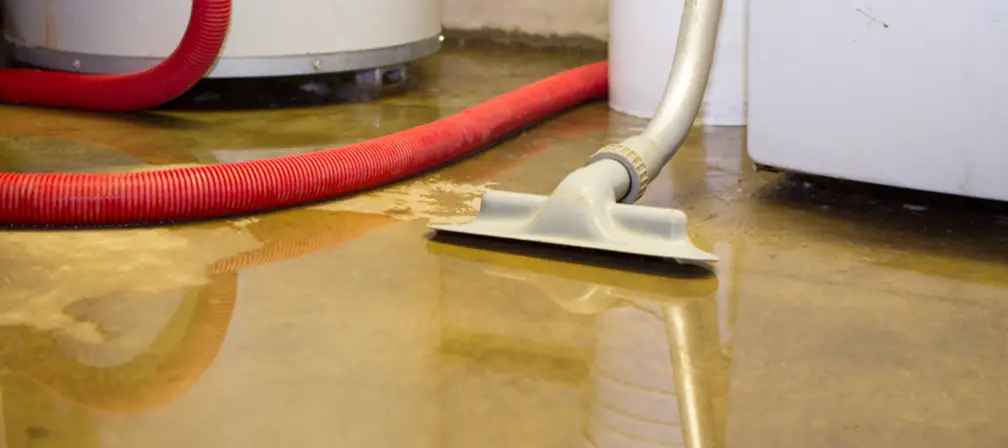
Where water has already come in, cleanup is its own job. See Providence water damage restoration for that, and the Providence service page for everything else this team covers.
Contact Roto-Rooter About a Sump Pump in Providence
Roto-Rooter is fully licensed and insured and has been in this trade since 1935. Call 401-228-1063 or schedule online and have the pump, the linkage, the crock, the valve and the discharge run assessed together, with a straight answer on repair against replacement. Roto-Rooter provides on-site estimates before any work begins and answers 24/7, 365 days a year. Sorting it out in a quiet week is the cheapest plumbing peace of mind available.

Sump Pump Faults That Show Up in the Linkage
Stone Foundations, Glacial Till and Storms Off the Water
SPECIAL FINANCING AVAILABLE
We have partnered with Synchrony Bank to offer financing options to make your plumbing repair expenses as convenient and stress-free as possible.