Sump Pump Repair and Installation in New York
Key Takeaways: The Sump Pump That Is a Cellar's Only Drainage
- On a lot where the lowest floor sits below the street sewer, gravity does nothing for you. Every drop that lands on that floor leaves because a pump lifted it, which makes the pit a primary system rather than a backup.
- That also means a dead pump is not a slow leak, it is a floor with no drainage at all, and the water level starts climbing from the first minute.
- Narrow lots and shared walls leave almost nowhere for a discharge line to run, so the route is long, mostly vertical, and full of joints that nobody has traced in years.
- A sump pit takes groundwater and clear water. Waste from fixtures below the sewer line is a separate piece of equipment, and mixing up the two is the most common misunderstanding on this floor.
- A float switch that has not moved for a year is the part most likely to be stuck when a storm finally asks it to work.
- The check valve holds a tall column of water between cycles. When it wears, the column falls back and the pump short cycles itself into an early replacement.
- Roto-Rooter is fully licensed and insured and answers in New York 24/7, 365 days a year.

There is one fact about the lowest floor of a great many buildings in this city that changes how everything below it has to be plumbed, and most owners have never had it explained to them.
Nothing Down There Drains by Itself
The sewer in the street runs at a fixed depth. Anything in a building above that line drains by gravity, which is why nobody thinks about it. Anything below that line does not, and across the older attached and semi-attached housing of New York the cellar floor is routinely below it. Sometimes the building was built that way. Sometimes a later owner lowered the floor to gain headroom. Either way, the water that reaches that slab has no downhill route out of the building, and the only thing moving it is a pump.
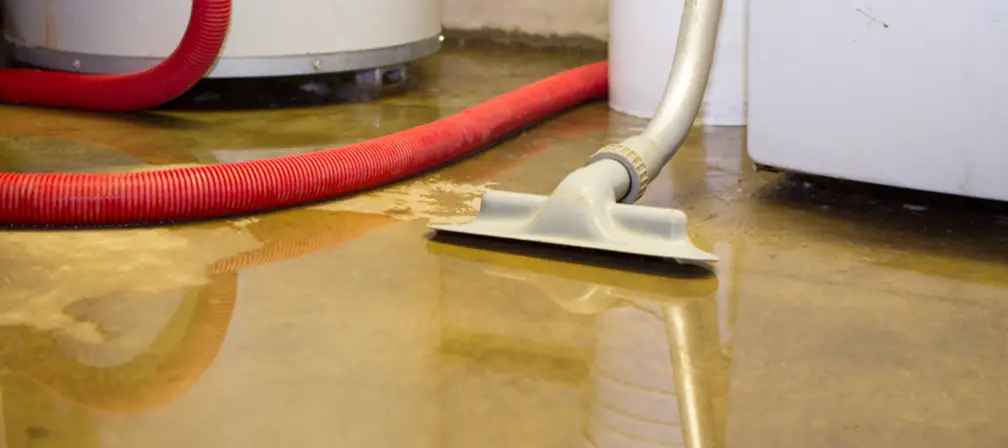
This is why the failure feels so different here than it does in a suburb. On a property with a graded yard, a dead pump means water accumulates faster than the ground can take it. In a cellar below the sewer line, a dead pump means the floor has no drainage whatsoever, so groundwater weeping in through the slab and the walls simply stays. The level does not spike, it climbs, quietly and without stopping, which is exactly the pattern that lets a small problem reach the electrical panel before anyone opens the door.
What Stops a Sump Pump in a House With No Side Yard
The mechanical failures are the ordinary five and every one of them has a recognizable symptom. A float switch drifts against the wall of the pit or catches on the discharge pipe, and the pump never gets the signal. An intake screen packs with grit and the motor runs while nothing moves. An impeller seizes and the unit hums. A check valve loses its seal, the column of water standing in the vertical run falls straight back into the pit, and the pump restarts within seconds and short cycles until the motor gives out years early.
The fifth is not a pump failure. The power goes, and a healthy machine sits in a filling pit doing nothing at all. What is particular to this city is the sixth problem, which is not really a failure either: the discharge line. On a lot with a shared wall on one side and a few feet of alley on the other, the route out is long, climbs a full story or more, and has usually been extended or rerouted by several different hands. A sag, an undersized section or a joint that has opened will quietly reduce how much water actually leaves the building, and none of it shows until the inflow rises.
Serving the entire New York metro area, Including:
Counties in the New York Metro Area
Getting the Water Out of a Building With Nowhere to Put It
Discharge is the hard half of this job in a dense city. The pump has to lift water a full story or more to reach a permitted outlet, and the column standing in that pipe between cycles is held up entirely by the check valve. When the valve wears, every shutoff dumps that column back into the pit, the float switch lifts again, and the unit enters the short cycling that ends motors early. Replacing a valve is small work. Replacing the motor it killed is not.
Where the line ends matters just as much. A run that discharges a few feet from the wall on a narrow New York lot is watering the ground the pit is draining, and the pump will move the same water repeatedly until something wears out. The outlet has to reach a point where the water genuinely leaves, which on these lots usually means a longer run than anyone expected, and it must never be an easy tie-in to the fixture drains inside the building. If nobody has traced the line from the pit to its outlet, that hour is the highest-value hour available on this system.
Is a Sump Pump the Same as an Ejector Pump?
No, and the confusion causes real damage. A sump pump sits in a pit that collects groundwater and clear water arriving through the slab, the walls and the drain tile, and it lifts that water to a stormwater outlet. An ejector is a different machine handling waste from fixtures installed below the sewer line, sealed and vented because of what it moves. They are frequently in the same room, sometimes a few feet apart, and homeowners test one believing they have tested the other.
This page is about the first of the two. If the pit is taking anything other than clear water, that is not a sump pump question and it needs to be looked at immediately rather than diagnosed from a distance.
Pit Size and Cycling on a Pump That Carries the Whole Floor
Sump pit dimensions were set by whoever cut the hole, and in buildings that have been altered repeatedly that person was solving a floor plan nobody uses now. A pit that is too shallow refills before the motor has cooled, so the unit short cycles and burns through its rated duty in a season. One that is too large lets water stand, go stale and drop sediment onto the intake, which is where a clogged screen starts.
The rhythm is the diagnostic, so it is worth learning on an ordinary rainy day. Once you know that the pump normally runs thirty seconds every few minutes, a run that has stretched to two minutes on the same weather tells you something before any water does. Continuous running during a genuine downpour can be correct. Continuous running in a dry week, or a motor that cuts out on its own thermal protection and goes silent for twenty minutes, is not.
Backup Power When the Street Goes Dark
The most common real gap on these installations is the absence of any second source of power, and it matters more where the pit is the only drainage the floor has. A battery backup is a second pump with its own supply. It carries a pit through an outage of hours rather than days, and the number of hours depends entirely on how fast water is arriving. It is not indefinite, it does not excuse keeping a primary pump that is already failing, and it should be paired with a high-water alarm, because a cellar in a building where nobody goes down for a week is exactly the place a silent failure hides.
The Test That Takes a Bucket and a Flashlight
Pour water slowly into the pit until the float switch lifts. The pump should start, clear the pit, and stop cleanly without restarting a second later. Listen for a hum with no flow, watch whether the level jumps straight back up at shutoff, and time the run so there is a figure to compare against next time. If there is an alarm, add enough water to trip it and confirm it sounds. If there is a backup, cut power to the primary and watch the second unit pick up.
Twice a year is enough. What the test cannot tell you is whether the unit keeps up under real inflow, whether the long vertical run is clear along its whole length, or where the outlet actually discharges. Those need somebody looking at the pit, the pump, the valve and the line as one system.
What This Team Repairs, and What It Refers Out
Repair, replacement, new installation, backup systems, check valve work, discharge line work and a full diagnosis of the pit are all things Roto-Rooter handles. Waterproofing a foundation, excavating outside a wall and structural repair are a different trade and we neither perform them nor offer to look at them. That line is worth stating plainly, because on a tight lot it is genuinely possible to spend money on a larger motor and change nothing. A pump manages the water that reaches the pit. It does not stop water from reaching the building.
Where water has already spread across a floor, cleanup is separate work. See New York water damage restoration for that, and the New York plumbing page for everything else this team covers.
Book a Sump Pump Service Visit in New York
Roto-Rooter has been working on New York plumbing since 1935 and is fully licensed and insured. Call 212-687-1726 or schedule online to have the pit, the pump, the float switch, the check valve, the backup and the full length of the discharge run assessed together rather than one part at a time. Roto-Rooter provides on-site estimates before any work begins and answers 24/7, 365 days a year. When the lowest floor has no other way to drain, a tested pump is the plumbing peace of mind that belongs on a maintenance schedule.

The Warnings a Cellar Gives First
Narrow Lots, Shared Walls and Low Ground
SPECIAL FINANCING AVAILABLE
We have partnered with Synchrony Bank to offer financing options to make your plumbing repair expenses as convenient and stress-free as possible.