Hydro Jetting in Honolulu
Key Takeaways: What Happens When Nothing in the Yard Ever Sleeps
- A line cleared of roots that closes again inside a year is not bad luck. Growth here does not pause for a winter, so anything cut in the pipe starts coming back the week after the truck leaves.
- A cutter head removes the mass and leaves the fine root hair still anchored in the joint, and that hair is the frame the next blockage builds on.
- Hydro jetting scours the full circumference of the pipe with high-pressure water, so the hair and the material caught on it leave the line rather than staying as a starting point.
- A video camera inspection comes first, to find which joints are admitting roots and to establish the pipe is sound enough to clean under pressure.
- Roots, grease and mineral scale in older cast iron are three separate findings with three different answers, and the footage is what tells them apart.
- Not every line is a candidate. A collapsed length, a badly offset joint, or a wall thinned by long corrosion needs a repair conversation instead of a hose.
- Warm rain, deep tropical soils and a mature canopy across older Honolulu neighborhoods keep the growing conditions above a lateral working all year.
- Roto-Rooter is fully licensed and insured, and answers in Honolulu 24/7, 365 days a year.
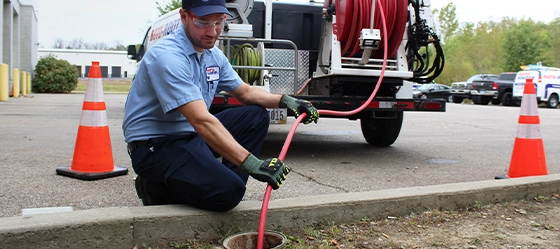
Most of the country gets a few months a year when the ground goes quiet. Trees stop putting on growth, root systems idle, and a lateral that has just been cleared of an intrusion gets a genuine head start. Honolulu never gets that. The growing season here runs continuously, warm rain keeps the soil working every month, and a root that found a joint in your sewer line last spring has been extending into it ever since without a break. Hawaii is the one state where that is true of every month on the calendar.
That single fact reorganizes the whole conversation about cleaning a line in this city. It is not that roots are worse here than anywhere else. It is that the interval you get out of a given piece of work is shorter, so how thoroughly the work is done matters more. A line opened and left with the fine material still in place will be back. A line taken back to the pipe wall starts from nothing.
Why a Root Cut Buys Less Time Here
A cutter head does exactly what it is built for. It goes down the line, takes the root mass out of the bore, and flow returns immediately. What it does not do is remove the fine hair still anchored in the joint the roots came through, or the grease and paper that were caught on that hair before anyone arrived. Both stay. Both are already the beginning of the next blockage.
In a market with a hard winter, that residue sits inactive for months and the household gets a comfortable year. In Honolulu the same residue is growing the week after the visit. The difference between a line that gives trouble every year and one that goes quiet for a long stretch is almost entirely a question of what was left behind, which is why the second half of the job matters more here than most people expect. It is also why a Honolulu household and a mainland one can do exactly the same thing and get very different mileage out of it.
What Hydro Jetting Removes After the Cutter Head
A jetting hose carries a nozzle that directs high-pressure water backward against the pipe wall while the hose is drawn through the run. The scour covers the whole circumference rather than a hole through the middle of the obstruction, and because the jets face behind the nozzle they drive what they lift toward the main instead of packing it further in. Root hair is stripped from the joint it came through. Grease that cooled and set along the crown comes away. Sludge in a flat stretch is flushed rather than pushed along. Mineral scale in older cast iron is cut back toward the original bore, which is the descaling half of the work.
That end-to-end difference is the whole argument for the method, and it is why Roto-Rooter treats cleaning the pipe back to the wall as the standard rather than as an upgrade. The cutter head and the hose are not competing tools here. They are two halves of one job, and skipping the second half is what sets the clock running again.
Serving the entire Honolulu metro area, Including:
Counties in the Honolulu Metro Area
When the Joint Is the Problem, Not What Came Through It
Growth explains why a line here refills. It does not decide whether the line can be cleaned, and three conditions on the footage settle that instead. A section that has given way cannot be restored by anything passing through it. A joint separated far enough to leave a step will stop the hose and is a structural fault in its own right. A wall corroded thin, which humid island ground does nothing to discourage, may not survive the pressure. On a Honolulu lot that call is worth making before a hose comes off the truck rather than after.
There is a version of this specific to a root-prone market. Cleaning removes what is in the pipe, but the opening the roots came through is still an opening, and if the camera shows a joint that has separated or a crack running along a length, the honest answer is that a cleaning schedule is a way of living with a defect rather than a fix for it. High-pressure water cleans a pipe. It does not restore one, and a technician who has watched the footage will tell you which of the two conversations you are in.
How Often Does Hydro Jetting Need Repeating on a Root-Prone Line?
That follows from what the camera shows rather than from a rule. A line with one modest intrusion at a single joint, cleaned back to the wall, can go a long time without attention. A run with several open seams under an established canopy is working against continuous regrowth, and the sensible plan is to set an interval from the condition found on the first inspection, then adjust it once the second visit shows how quickly the line actually refilled.
That is a better basis than a number somebody quoted over the phone, and it is one of the practical arguments for the before-and-after footage. A Honolulu homeowner with a recorded baseline can compare against it in a few years instead of starting the diagnosis over.
Where a Commercial Run Changes the Math
A house lateral and a restaurant waste run carry different diameters, different daily loads, and very different consequences when they close. A cleaned residential line in Honolulu can go years before it needs attention again, depending on what fouled it. A kitchen putting cooking waste through the same run every service is working against a known accumulation rate on top of whatever the yard is doing, which is why food service operators across Hawaii settle on a planned interval rather than wait for a failure in the middle of dinner.
Roto-Rooter covers both. For the wider set of plumbing work across a property, the Honolulu plumbers page is the place to start.
What Access Looks Like Around a Mature Yard
A technician locates the cleanout, runs the camera, and talks through what is on the screen before anything else happens. If the run is a candidate, the hose goes in, the pipe is cleaned back through the affected stretch, and the camera goes down a second time so the wall can be seen rather than described. Roto-Rooter provides on-site estimates before any work begins, so nothing proceeds until the scope has been agreed.
Access is the practical variable on an established Honolulu lot, and it is usually the planting that complicates it. A cleanout that was clear when the house was new can be under thirty years of growth, buried by a wall or a patio, or absent altogether. Mentioning what you can find when you call saves time on the day, and where none exists the inspection covers what it would take to fit one. If a line is actively backing up rather than slowly closing, start with emergency plumbing help in Honolulu, because restoring flow comes first and the cleaning conversation follows.
Book Hydro Jetting on Your Honolulu Sewer Line
Roto-Rooter has been cleaning sewer lines since 1935 and is fully licensed and insured. Call 808-842-5680 or schedule online to arrange an inspection, and get the plumbing peace of mind that comes from knowing what is in the line rather than guessing at it. Roto-Rooter answers 24/7, 365 days a year.

The Signs a Line Is Being Reclaimed by the Yard
A Growing Season With No End, and the Pipe Underneath It

SPECIAL FINANCING AVAILABLE
We have partnered with Synchrony Bank to offer financing options to make your plumbing repair expenses as convenient and stress-free as possible.