Hydro Jetting in Fishers
Fishers hydro jetting: what happens on the day, and why
A wash is a short, orderly procedure wrapped around two camera passes, and knowing the order is the easiest way to know what you are paying for.
- Day sequence: locate the access, film the line, agree the scope from the recording, run the nozzle, film again to verify.
- The pre-wash recording is the safety screen: collapse, offset joints and thin walls are found there and routed to repair instead of pressure.
- Root fiber at sound joints washes out completely; the joint stays on file and sets the return visit.
- Cost follows what the camera measures, and the estimate is written before the equipment runs.
- Nothing about the day requires digging: both tools travel inside the pipe through existing openings.
- Washed lines outlast cleared ones because the material that rebuilds clogs leaves with the wash water.
- Cold winters harden deposits and stress joints, which is why the camera pass before the cold half of the year is worth booking.
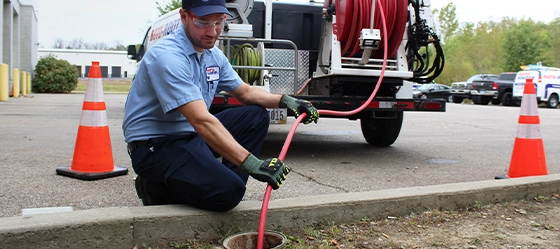
Fishers properties meet this service with a question that deserves a literal answer: what actually happens between arrival and cleanup. The honest version has five steps and no improvisation.
Steps one and two: access and film
The crew opens the cleanout or prepares the fixture entry, then feeds the camera the length of the run while everyone watches the monitor. The recording shows the pipe material, the joints, the slope and every deposit, and it carries the safety verdict: wash, or repair, or in the simplest cases nothing at all. Scope and price are agreed from that screen, in writing, before the next step happens.
Step three: the wash
The jetting hose follows the camera path. Nozzle jets angled backward scrub each stretch of wall as the head works forward, and the spent flow carries grease, scale flakes, sludge and root fiber back out the access into containment. The pump is the loudest thing on the property. Depending on the run, this step takes minutes to an hour.
Step four: the verification film
The camera repeats the trip down a clean pipe. The before and after pair is the deliverable that outlives the visit: proof of the result, the baseline for next time, and the record that keeps future pricing honest.
Step five: close up
Access points are capped, the containment is packed out, and the space is left as it was found. That is the whole day, and every part of it travels inside the pipe.
What the safety screen looks for
Three findings change the plan: a collapsed span, a joint sheared out of line, and iron walls thinned by corrosion. Lines with any of the three are handed to repair with footage supporting the recommendation. Everything else, including most genuinely old pipe, washes.
Serving Fishers and surrounding communities, Including:
Counties in the Fishers Area
Answers to the questions Fishers callers raise when booking a wash day.
Cost drivers
The four the camera measures: run length, access condition, deposit volume and pipe repair status. Written on site, before work, specific to the line that was filmed.
What the snake leaves
The lining: grease film, soap residue, sediment, scale and root fiber, all still attached to the walls the blade passed. The wash removes that lining, which is why its results outlast a clearing on the same line.
Roots and safety
Sound joints wash safely and completely. The inspection verifies joint condition before any pressure, stable joints enter the seasonal rhythm, and separating joints head to repair with their evidence attached.
Duration versus snaking
Longer, by construction: the cleared line keeps the raw material for its next clog, and the washed line does not. Actual longevity tracks the inputs, kitchens, roots, water chemistry, which is why the file matters more than the brochure.
Digging
Not part of a wash day. Entry, travel and debris exit all happen through existing access points. Excavation belongs to repairs and only to repairs.
What the inspection checks
- Material and era of the pipe
- Joint alignment and seam status
- Slope, since flat runs settle solids
- Wall thickness and patch condition
- Deposit identity, volume and extent
Those five findings set the day: wash scope, technique, price, or repair referral. Nothing on the list is guessable, which is the point of filming first.
Book a Fishers Jetting Day
Reserve the visit at 317-787-4631 or through online scheduling. Roto-Rooter is fully licensed and insured and has done plumbing work since 1935. The Fishers plumbing page covers the other local services, and active backups go to emergency plumbing in Fishers ahead of any wash.

Jetting Day, Start to Finish
Freeze, Thaw and Clay Under Central Indiana

SPECIAL FINANCING AVAILABLE
We have partnered with Synchrony Bank to offer financing options to make your plumbing repair expenses as convenient and stress-free as possible.