Hydro Jetting in Cleveland
Key Takeaways: What Cold Ground Does to an Old Clay Lateral
- A run that closes at the same spot every time is telling you about that spot, and on older pipe that usually means a joint rather than a mystery.
- Hydro jetting scours the sewer line back to the pipe wall around the full circumference, which is the only way a coating comes out rather than gets bored through.
- Dense lake plain clay holds water against a buried pipe for most of the year, and tree roots follow that moisture to any joint that has already opened.
- Frost works the short sections of a clay tile lateral, and a lip where one length sits proud of the next catches paper and solids on the way past.
- A video camera inspection comes first, both to find the cause and to confirm the pipe can take pressure, and comes back afterward to show the wall is genuinely clear.
- Scale inside older cast iron narrows the bore from the wall inward, and descaling is the part of this work that gives it back.
- A collapsed section or a badly offset joint is not a jetting candidate. That is a repair conversation and honest technicians say so.
- Roto-Rooter is fully licensed and insured, and answers in Cleveland 24/7, 365 days a year.
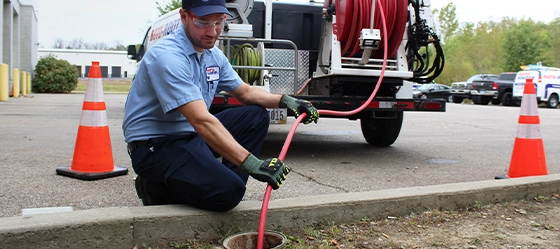
Ground that freezes and thaws does not put everything back where it found it. Over enough winters a buried lateral gets nudged, and on the older pipe under a great many Cleveland streets that pipe is clay tile laid in short lengths with a joint every few feet. Movement at any one joint on a Cleveland lateral is slight. What it produces is not small: a lip where one section sits slightly proud of the next, and every piece of paper and solid matter moving down the run has to get past it.
What Hydro Jetting Does at a Joint That Has Shifted
A cable sent down that line will punch through whatever has piled up behind the lip and flow will return, which is why the problem seems to go away. The pile rebuilds because the lip is still there and still catching. Hydro jetting works differently: a nozzle on a hose throws high-pressure water backward against the pipe wall while the hose is drawn through, so the cleaning is a scour across the full circumference and material moves back toward the access point instead of downstream. The run gets cleaned right up to the offset, and the camera then shows exactly how much of a step the crew is dealing with. Cleaning cannot correct it, but knowing it is there changes what anybody should expect from the next visit.
Grease, sludge and mineral scale all come off the same way. Scale in older cast iron gets cut back toward the original bore, which is the descaling half of the work, and root hair left at a joint after a cutter head is stripped out.
Why One Lip Catches Everything That Passes
A step of a quarter inch does not sound like a defect, and on a drawing it is not one. In a pipe it is a shelf. Paper folds against it, solids stall behind it, and grease that would otherwise have kept moving finds something to hold onto. The pile that forms is not spread along the run, it sits in a foot or two of pipe, which is why the same fixture misbehaves every time and why a crew can usually predict where the camera will stop. Root hair coming through the same open seam turns the shelf into a strainer. Cleaning takes all of that out and gives the bore back. The step stays where it is, and knowing it is there is what tells a homeowner in Cleveland whether they are on a maintenance interval or heading toward a repair.
Serving the entire Cleveland metro area, Including:
Counties in the Cleveland Metro Area
Where Pressure Stops Being the Answer
Frost that can move a joint can also finish one off. Three findings rule it out. A collapsed length has no bore left to clean. A joint offset badly enough will catch the hose, and what is wrong there is structural rather than dirty. A wall thinned by long corrosion may not survive pressure at all. The inspection is what reveals each of those in advance, which is the whole reason it happens first.
When one of them turns up, cleaning is not the fix and the discussion turns to repair. For a lateral running out under a Cleveland tree lawn to a main in the street, that can mean a trenchless repair rather than an open trench, and it begins from footage that already exists rather than from a fresh round of exploratory digging.
Will Hydro Jetting Crack an Old Clay Tile Line?
Sound clay tile takes cleaning without trouble, and a great deal of the pipe under this city is exactly that: old, but intact. Cracked tile, a length that has already broken, or a joint pulled far enough apart to be a structural problem is a different situation, and the answer there is no. The camera pass is what distinguishes the two, and a technician who has seen the footage will say which one is in front of them before the hose comes off the reel.
Commercial Runs Do Not Wait for a Slow Season
A house lateral and a kitchen run differ in diameter, in load and in what a failure costs the owner. A residential line in Cleveland cleaned back to the wall can go years before it wants attention, and what caused the buildup decides how many. A restaurant putting fat and food solids through the same pipe daily is working against a rate it can measure, which is why operators across Ohio tend to set an interval and clean on a quiet morning rather than during a Friday service.
For anything that is not this service, the Cleveland plumbers page covers the rest of the work.
What the Second Camera Pass Is For
The camera that goes down after the hose answers a different question from the one that went down before it. The first asks what is in the pipe and whether the pipe can take the work. The second asks whether the wall is clean rather than merely open, which is the difference between paying for a result and paying for a visit. It also leaves a homeowner in Cleveland with a recorded baseline, so the next diagnosis a few years out starts from footage rather than from nothing.
Doing the Work Before the Ground Hardens
Cleaning a line happens year round in Cleveland, but anything the camera turns up that needs digging is easier in fall than in February. Frozen clay is slow to open and slow to put back. A homeowner who gets the inspection done in the mild months has the option of scheduling a repair on their own terms instead of arranging one during a cold snap with the house out of service.
Frozen ground is also why an inspection in Cleveland is worth booking ahead of the first hard freeze rather than after it. If the line is backing up right now rather than slowly getting worse, begin with emergency plumbing help in Cleveland. Restoring flow comes first and the cleaning conversation follows.
Schedule a Cleaning Before the Ground Freezes
Roto-Rooter has been in business since 1935, is fully licensed and insured, and answers in Cleveland 24/7, 365 days a year. Call 216-226-4506 or schedule online to get a camera down the line and a straight account of what is in it. Crews cover Cleveland every day of the week. Roto-Rooter provides on-site estimates before any work begins, and going into an Ohio winter knowing the condition of the pipe is most of the plumbing peace of mind available.

What Turns Up on a Pre-War Lateral
Lake Plain Clay and Housing With Real Age on It

SPECIAL FINANCING AVAILABLE
We have partnered with Synchrony Bank to offer financing options to make your plumbing repair expenses as convenient and stress-free as possible.